
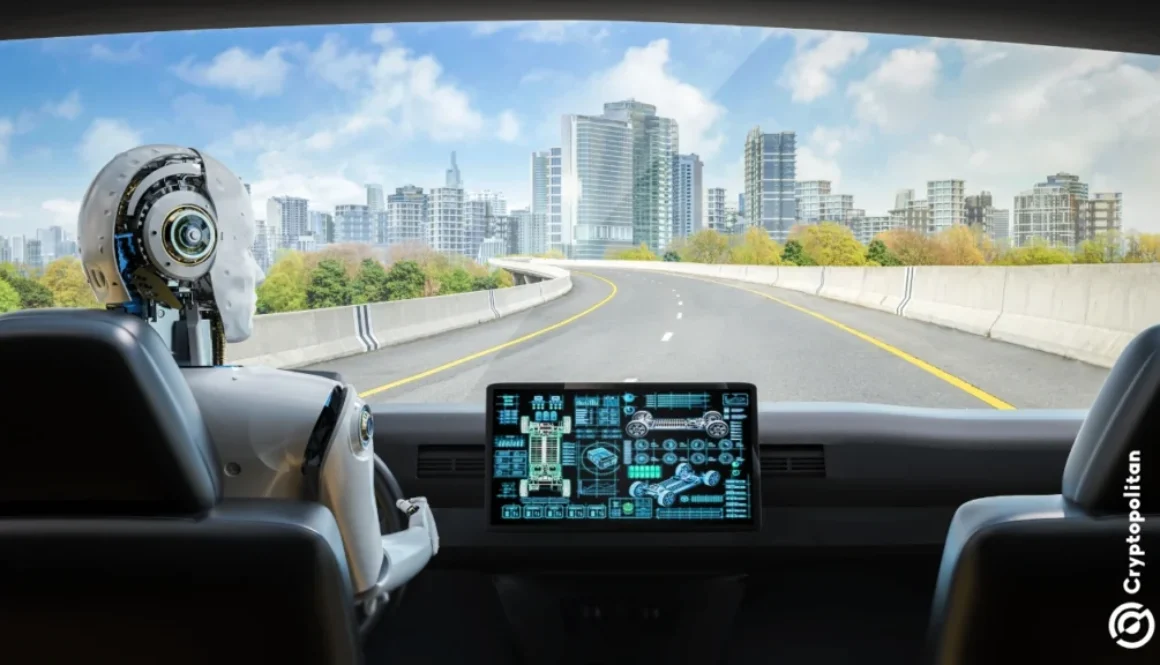
Ursula von der Leyen advocates for an “AI first” strategy in Europe
European Commission President Ursula von der Leyen is pushing the European Union toward an “AI first” strategy, arguing that artificial intelligence development could reshape the continent’s struggling automotive sector and help it compete with technological advances from the United States and China. Speaking at Italian Tech Week in Turin, von der Leyen called for a coordinated European effort around autonomous vehicles and intelligent mobility systems, positioning AI adoption as central to Europe’s industrial future.
A Call for European Innovation Leadership
Von der Leyen framed her vision as both an economic and safety imperative. Self-driving cars are already operating on streets in America and China, she noted, raising the question of why Europe should lag behind in this critical technology.
The Commission chief specifically proposed creating a network of European cities to test autonomous vehicle technology, revealing that approximately 60 Italian mayors had already signaled their interest in participating. This pilot approach would allow EU member states to gather real-world data while developing regulatory frameworks suited to European conditions.
“The future of cars – and the cars of the future – must be made in Europe.”
— Ursula von der Leyen, President of the European Commission
Beyond autonomous vehicles, von der Leyen emphasized that an “AI first” strategy would support broader mobility goals. She highlighted potential benefits including reduced traffic congestion, improved connectivity for remote regions, job preservation in the automotive sector, and enhanced road safety through intelligent transportation systems.
Von der Leyen’s “AI first” approach explicitly links artificial intelligence development to safety outcomes, framing competitive positioning as inseparable from public welfare objectives.
Europe’s Automotive Sector Under Pressure
The EU’s traditional automakers face substantial headwinds. Pressure to decarbonize, meet digital transformation demands, and compete with foreign technology leaders has created an urgent need for innovation and investment.
Chinese and American manufacturers have accelerated development of autonomous capabilities and electric vehicle technology, leaving European producers concerned about market share erosion. Von der Leyen’s emphasis on “made in Europe, and made for European streets” reflects Brussels’ broader industrial strategy to keep critical manufacturing and technology development within the bloc.
The Commission has already begun supporting this vision through regulatory measures. Recent regulatory actions targeting Chinese EV manufacturers demonstrate the EU’s protective stance toward domestic industry, though these measures simultaneously signal the competitive threat that foreign players represent.
The Global Autonomous Vehicle Race and European Disadvantage
The autonomous vehicle market represents one of the most capital-intensive and strategically significant technology frontiers of the coming decade. Global autonomous vehicle market valuations have surged past $50 billion, with projections suggesting the sector could exceed $500 billion by 2035 as Level 4 and Level 5 autonomous capabilities reach broader commercial deployment.
Currently, the technological leadership remains concentrated among American and Chinese firms. Tesla, Waymo, Cruise, and other U.S.-based companies operate autonomous fleets across multiple American cities and have accumulated billions in autonomous driving miles. Chinese competitors including Baidu, Li Auto, and NIO have deployed robotaxi services in cities like Beijing, Shanghai, and Chongqing, rapidly advancing their machine learning models through real-world operational data.
European automakers including Volkswagen, BMW, and Mercedes have invested heavily in autonomous capabilities but remain several years behind their American and Chinese counterparts in deployment timelines. This gap represents both a technological and commercial disadvantage, as companies accumulating real-world autonomous driving data generate competitive advantages through machine learning improvements that become exponentially harder to overcome once established.
Von der Leyen’s proposal to establish a coordinated European testing network directly addresses this temporal disadvantage. By accelerating regulatory approval for autonomous vehicle testing across multiple jurisdictions simultaneously, the EU aims to compress the development timeline and create pathways for European manufacturers to catch up on real-world data accumulation.
Chinese EV Makers Navigate Tariffs and Market Barriers
Despite facing significant regulatory obstacles, Chinese electric vehicle manufacturers have captured meaningful market share in Europe. The EU implemented a 17.4% countervailing duty on Chinese-made vehicles and invoked the Foreign Subsidies Regulation, which has negatively impacted over 70% of Chinese EV firms operating in European markets.
Yet these companies have proven resilient. Chinese brands including BYD have adapted their strategies to navigate trade barriers while maintaining growth momentum.
As of June 2025, Chinese EV brands controlled approximately 10% of the European electric vehicle market. BYD’s sales tripled to 13,503 units by July 2025, surpassing Tesla and demonstrating rapid market penetration despite tariff headwinds.
A key adaptation has been the shift toward plug-in hybrid electric vehicles, or PHEVs. This strategy addresses a significant consumer preference in Europe: flexibility in charging infrastructure and extended range capability for long-distance travel. By offering vehicles that don’t require consumers to fully commit to pure electric powertrains, Chinese manufacturers have reduced purchase hesitation and captured buyers who remain concerned about charging network density.
This approach has proven effective precisely because it aligns with real European consumer behavior rather than fighting it. The strategy demonstrates how manufacturers can work within regulatory constraints while identifying market segments where consumer preferences differ from those in other regions.
Regulatory Fragmentation and Implementation Challenges
While von der Leyen’s push for coordinated EU-wide AI strategy is clear, implementation faces substantial fragmentation. Individual EU member states maintain distinct policies regarding Chinese investment, trade relationships, and regulatory frameworks, creating a patchwork rather than unified approach.
Geopolitical tensions between the EU, China, and the United States have intensified these divisions. Some member states prioritize protectionism and technological sovereignty, while others emphasize market openness and competitive dynamics. This institutional reality complicates Brussels’ ability to execute a coherent industrial strategy around autonomous vehicles and AI development.
Autonomous vehicle testing regulations illustrate this fragmentation. Germany permits Level 3 autonomous driving under specific conditions, while other EU nations maintain stricter limitations. Harmonizing these frameworks across 27 member states, each with distinct liability frameworks and insurance regulations, presents organizational challenges that extend far beyond technological considerations. The proposed network of 60 Italian cities represents a start, but scaling this approach across the entire EU requires resolving regulatory conflicts that have persisted for years.
Chinese companies considering future European investments must evaluate an uncertain regulatory landscape. While tariffs and subsidies regulations provide clarity on trade costs, the long-term trajectory of EU policy toward Chinese capital remains unclear, potentially deterring major infrastructure or manufacturing commitments.
Investment Requirements and Timeline Realities
Developing competitive autonomous vehicle capabilities requires sustained, substantial capital investment. Industry analysts estimate that achieving parity with current American and Chinese autonomous vehicle leaders would require European firms to collectively invest $40-60 billion over the next five to seven years, combined with recruitment of top machine learning and robotics talent operating in competitive labor markets.
The timeline pressure is acute. If Chinese and American companies continue accumulating autonomous driving data at current rates, the technological gap compounds with each additional year of deployment advantage. Machine learning models trained on millions of miles of real-world driving data develop capabilities that fundamentally exceed those trained on simulated or limited real-world data.
Chinese EV manufacturers have leveraged plug-in hybrid strategies to maintain competitive advantage despite tariff barriers that negatively impacted over 70% of these firms.
— Market Analysis
Strategic Implications and Path Forward
Von der Leyen’s “AI first” framework represents an attempt to establish clear strategic direction during a critical window. By positioning artificial intelligence as essential to European competitiveness, safety, and employment, she aims to rally political consensus around coordinated investment and regulatory approaches. Whether fragmented member-state interests allow effective execution remains an open question.
The coming months will reveal whether European cities, automakers, and technology developers can mobilize around this vision quickly enough to narrow the gap with competitors already deploying autonomous systems at scale. Success requires not only technical innovation but also political coordination across member states with divergent economic interests and geopolitical priorities.
The stakes extend beyond automotive manufacturing to encompass broader technological sovereignty and economic competitiveness in the AI era. A failure to develop competitive European autonomous vehicle capabilities would cede control over future mobility infrastructure to foreign technology leaders, with cascading implications for employment, industrial policy, and strategic autonomy across the continent.
Get weekly blockchain insights via the CCS Insider newsletter.