Ethereum Price Drifts Lower—Is $3,000 About to Be the Battleground?
Ethereum has pulled back from recent highs and is now testing critical support levels that could determine the direction of the second-largest cryptocurrency by market capitalization. The $3,000 zone has emerged as a potential floor for the current decline, with traders watching closely to see whether the world’s leading smart contract platform can stabilize or face further downside pressure.
Technical Setup and Key Resistance Levels
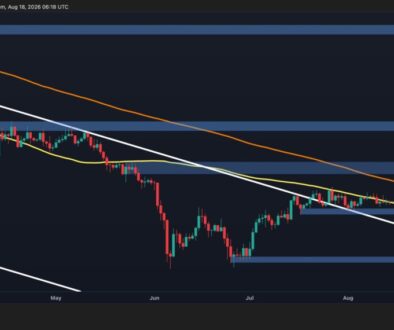
ETH retreated from a swing high near $3,250 and has since broken through several technical levels. The asset descended through $3,180 and $3,150 before testing the psychological $3,000 marker, eventually bottoming near $3,026 before attempting a recovery.
Currently, Ethereum remains trapped below the $3,200 barrier—a level that now represents the pivotal threshold for any sustained recovery. The 100-hourly simple moving average continues to act as overhead resistance, keeping price momentum contained even as bulls attempt to regain footing.
The immediate technical picture hinges on whether bulls can reclaim the $3,200 barrier, as sustained weakness below $3,050 could unlock deeper downside toward unexplored lows.
— Technical Analysis, CCS Research
A descending trend line on the hourly timeframe presents additional resistance near $3,175. Breaking decisively above $3,200 would be required to open the door to higher price targets, with $3,250 representing the next meaningful resistance zone if bulls can generate sufficient momentum.
Bullish Scenario: Path to Recovery
If buyers manage to overcome the $3,200 resistance decisively, the technical setup suggests a more aggressive rally could unfold. The $3,250 level would then become a secondary target, with penetration above this point potentially catalyzing a push toward $3,320 or even $3,400 in a near-term scenario.
Such a recovery would require sustained buying pressure and a shift in broader market sentiment affecting digital assets more widely. Currently, Ethereum remains part of a consolidation pattern that has constrained most major cryptocurrencies in recent trading sessions.
$3,250 — Secondary resistance target. $3,320–$3,400 — Extended upside targets if $3,250 is broken decisively.
Downside Risks and Support Floors
The bearish scenario poses a more immediate threat if selling pressure resurfaces. Preliminary support materializes at $3,080, but the more critical floor lies at $3,050—a level that represents the true boundary for the current consolidation range.
Failure to hold $3,050 would leave Ethereum vulnerable to deeper losses and venture into price territory that has not been thoroughly tested in recent trading. Such a breakdown could trigger cascading liquidations and accelerate downside momentum across the broader cryptocurrency market.
The psychological importance of the $3,000 zone cannot be overstated. Round numbers often function as psychological anchors for traders and automated trading algorithms, making them reliable inflection points during periods of consolidation or sharp moves.
$3,080 — Preliminary support. $3,050 — Major floor; breach here signals deeper downside risk. $3,000 — Psychological support zone.
Broader Market Context
Ethereum’s consolidation mirrors weakness across major digital assets, suggesting the pullback is not isolated to a single cryptocurrency but reflects broader sentiment shifts in the market. Bitcoin and other top-ranked assets have also pulled back from recent levels, creating a challenging environment for recovery attempts.
The consolidation pattern observed in Ethereum suggests that traders and investors are reassessing risk appetite after the recent advance. Until clearer directional conviction emerges, expect price action to remain choppy and rangebound around the key technical zones outlined above.
The second-largest cryptocurrency by market cap has retreated from its $3,250 swing high in a manner mirroring broader weakness across major digital assets.
— Market Observation, CCS
Monitoring volume during any attempted breakout will be essential. Strong volume accompanying a move above $3,200 would lend credibility to a recovery, while weak volume during a break below $3,050 might suggest capitulation selling rather than a structured move lower.
Ethereum’s Pivotal Role in the Cryptocurrency Industry
Ethereum’s price action carries significance that extends well beyond its individual market position. As the dominant smart contract platform, ETH serves as a barometer for investor confidence in decentralized finance (DeFi), non-fungible tokens (NFTs), and enterprise blockchain adoption. The network hosts the vast majority of DeFi total value locked (TVL) and continues to process hundreds of billions in transaction volume annually.
The current consolidation around $3,000 occurs against a backdrop of sustained innovation on the platform. Layer 2 scaling solutions, including Arbitrum and Optimism, have grown to process significant portions of Ethereum transaction volume while reducing costs. The successful merge to proof-of-stake earlier reduced energy consumption by 99.95%, addressing environmental concerns that previously weighed on institutional adoption.
Enterprise interest in Ethereum-based solutions remains robust. Major financial institutions and technology companies continue building infrastructure around the network, from custody solutions to institutional trading venues. This structural support suggests that while price volatility persists, the underlying demand fundamentals remain intact despite the near-term technical weakness.
Market Implications and Institutional Interest
The current price action has important implications for institutional capital flows into the cryptocurrency sector. Ethereum spot exchange-traded products and futures contracts have attracted significant capital from traditional finance participants. A breakdown below $3,000 could trigger forced selling from margin traders and automated portfolio rebalancing strategies, potentially amplifying downside pressure.
Conversely, a successful test and bounce from support at $3,050 or $3,000 could be viewed as a buying opportunity by longer-term institutional investors. Several major asset managers have increased cryptocurrency allocations following recent regulatory clarity and the launch of spot Bitcoin ETFs in the United States. Similar appetite exists for Ethereum exposure, particularly from firms focused on technology and innovation-driven strategies.
The stability of Ethereum’s price in the $3,000-$3,250 range suggests that natural demand exists at these levels. This type of sustained interest from both retail and institutional market participants creates a foundation less likely to experience a catastrophic collapse. Historical price data shows that Ethereum has found strong support at round-number psychological levels during previous consolidations.
Platform Developments and Competitive Positioning
Ethereum’s competitive position within the broader blockchain ecosystem remains unchallenged in terms of developer activity, network security, and transaction volume. Alternative layer-1 platforms such as Solana, Polygon, and newer entrants continue to capture market share, but none have replicated Ethereum’s combination of decentralization, security, and ecosystem breadth.
Upcoming platform upgrades and continued deployment of scaling solutions position Ethereum for sustained relevance regardless of the current consolidation. The transition to danksharding and other long-term scalability enhancements remains on track, with developers actively implementing changes that will further improve throughput and reduce transaction costs.
The economic security provided by Ethereum’s proof-of-stake mechanism—now backed by billions in staked ETH—creates a formidable barrier to competitive threats. Staking rewards continue to attract capital, with annual yields on staked ETH remaining attractive compared to traditional finance alternatives.
Regulatory Environment and Its Impact on Price Discovery
Recent regulatory developments, particularly in the United States and European Union, have created greater clarity around cryptocurrency classification and custody requirements. This regulatory maturation has paradoxically stabilized prices by reducing uncertainty premiums that previously inflated volatility. The current consolidation may reflect a market that has successfully priced in most foreseeable regulatory scenarios.
The potential approval of Ethereum spot ETFs in the United States could serve as a major catalyst for both the near-term price action and longer-term adoption trajectory. If such products receive regulatory approval during the consolidation period, the resulting capital inflows could potentially trigger a breakout above $3,250 and accelerate Ethereum toward $3,400 or higher.
Trading Considerations and Risk Management
Traders should also watch for any catalysts in the broader cryptocurrency ecosystem or traditional finance markets that could accelerate either scenario. Macroeconomic data, regulatory announcements, or major platform developments could provide the spark needed to push Ethereum out of its current consolidation zone.
Position sizing becomes critical in consolidation environments like the current setup. The proximity of support levels suggests that stop-loss placement below $3,000 is reasonable for long positions, while short sellers should maintain tight stops above $3,200 given the asymmetric risk-reward structure at current levels.
Liquidity analysis across major trading venues reveals that volume clusters around the $3,050 and $3,200 levels, reinforcing the significance of these technical zones. Traders can use this information to anticipate potential reactions when price approaches these areas, improving the precision of entry and exit timing.
Ethereum stands at an inflection point with profound implications for the entire blockchain industry. The $3,200 resistance and $3,050 support define the near-term range, with the $3,000 zone serving as a psychological floor. The outcome of this consolidation will influence not only price momentum but also institutional investment flows and market confidence in the broader cryptocurrency sector. How price action behaves at these critical levels over the next trading sessions will determine whether a recovery or deeper correction unfolds for the second-largest cryptocurrency by market capitalization, while the underlying platform continues to strengthen its competitive position through technological innovation and expanding enterprise adoption.
Get weekly blockchain insights via the CCS Insider newsletter.