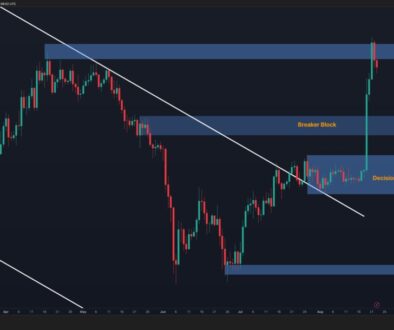
Ethereum (ETH) Tops $4,500 for First Time Since 2021, Fueling Momentum in ERC-20 Altcoins Like Mutuum Finance (MUTM)
Ethereum has surged past $4,500 for the first time since late 2021, marking a significant recovery that is generating widespread attention across cryptocurrency markets. The move reflects institutional accumulation, growing adoption of decentralized finance infrastructure, and strengthening macro conditions. This rally is now extending into the broader altcoin ecosystem, particularly among ERC-20 based projects seeking exposure to Ethereum’s momentum.
Ethereum’s $4,500 Milestone Signals Institutional Confidence
The Ethereum price breakout above $4,500 represents more than a technical achievement—it signals renewed confidence in the network’s long-term utility and value proposition. The advance has been supported by sustained institutional buying, including corporate treasury acquisitions and significant spot exchange-traded fund activity. These developments suggest that large investors view current valuations as attractive entry points.
Multiple factors are converging to drive this momentum. Ethereum’s position as the dominant smart contract platform continues to attract developers and capital to its ecosystem. Staking rewards remain attractive relative to traditional financial yields. The growing maturity of decentralized finance applications—from lending protocols to derivatives platforms—demonstrates the network’s practical utility beyond speculative trading.
Ethereum’s break above $4,500 reflects sustained institutional demand and growing confidence in the network’s DeFi infrastructure and long-term potential.
— CCS Market Analysis
The macroeconomic backdrop has also shifted favorably. Declining interest rate expectations, technological breakthroughs in layer-two scaling solutions, and increased corporate blockchain adoption have all contributed to a more constructive environment for digital assets. These dynamics create momentum that often extends to tokens built on leading Layer 1 networks.
Ethereum reached $4,500 for the first time since November 2021, representing a recovery of approximately 60% from its 2023 lows. This milestone coincides with record staking activity and growing institutional participation in Ethereum-based protocols.
Industry Context and Market Implications
Ethereum’s resurgence occurs within a broader cryptocurrency market recovery that began in late 2023. The digital asset industry has matured significantly since the previous bull cycle, with institutional infrastructure substantially improved. Major financial services firms including BlackRock, Fidelity, and Grayscale have expanded cryptocurrency offerings, reducing barriers to institutional participation. The approval of spot Bitcoin ETFs in major markets demonstrated regulatory receptiveness to digital asset investment vehicles, creating a spillover effect that benefits Ethereum and the broader ecosystem.
Market capitalization dynamics reveal Ethereum’s growing importance within cryptocurrency markets. Bitcoin remains the category leader by market cap, but Ethereum’s dominance among smart contract platforms is undisputed. The network now processes hundreds of billions in annual transaction volume and hosts trillions in total value locked across decentralized finance applications. This economic activity generates real fee revenue that flows to network validators, creating a productive asset class distinct from purely speculative cryptocurrencies.
Layer-two scaling solutions including Arbitrum, Optimism, and Polygon have reduced transaction costs and latency on Ethereum, addressing historical limitations that constrained mainstream adoption. These scaling networks now process substantial transaction volume independently while settling periodically to Ethereum’s main chain. The ecosystem’s evolution from a single-layer network to a multi-layered infrastructure stack demonstrates maturation and technical progress that justifies higher valuations.
ERC-20 Projects Capitalizing on Network Momentum
When Ethereum experiences significant price appreciation, tokens built on its blockchain often benefit from what analysts call “beta” effects—they tend to move in the same direction but with amplified volatility. This dynamic is particularly pronounced for projects that directly address Ethereum’s core utility or address specific gaps in the DeFi ecosystem.
Presale tokens and newer ERC-20 projects have become popular among investors seeking leveraged exposure to Ethereum’s growth story. These projects typically offer higher potential returns but carry correspondingly higher risk profiles. Due diligence becomes critical when evaluating emerging tokens, particularly those in early fundraising stages.
The Ethereum ecosystem currently hosts thousands of active tokens across decentralized finance, gaming, infrastructure, and utility categories. The quality and viability of these projects varies considerably. Investors should evaluate team credentials, smart contract security, regulatory compliance, and genuine product-market fit rather than relying solely on association with Ethereum’s brand.
The Mechanics of Early-Stage Token Offerings
Presale stages for emerging tokens typically involve graduated pricing structures. As development progresses and more capital is raised, token prices increase incrementally to reward early supporters. This structure incentivizes rapid participation but also carries risk for later-stage investors who may enter at higher valuations.
A critical consideration for any presale investment is whether the underlying protocol addresses a genuine need within the blockchain ecosystem. The DeFi lending space has become increasingly competitive, with established protocols like Aave and Compound commanding significant market share. New entrants must demonstrate clear differentiation—whether through superior user experience, innovative features, or superior risk management.
Presale tokens carry substantial risk and are unsuitable for conservative investors. They lack the market liquidity and price discovery mechanisms of established cryptocurrencies. Many presale projects fail to deliver on their stated goals or never achieve meaningful adoption post-launch.
Smart contract audits represent one layer of risk mitigation but do not guarantee protocol safety or commercial success. Third-party audits examine code for technical vulnerabilities but cannot validate whether a business model is sustainable or whether market conditions will favor adoption. Investors should view security audits as necessary but insufficient due diligence.
Background on DeFi Market Evolution
Decentralized finance has grown from experimental protocols managing millions in capital to mature applications managing tens of billions. The industry experienced significant turbulence during 2022-2023 with several high-profile collapses including FTX and Three Arrows Capital. However, these episodes primarily affected centralized platforms rather than on-chain protocols. The resilience of decentralized protocols through market stress validated the fundamental value proposition of transparent, self-custodial financial infrastructure.
Total value locked in DeFi protocols currently exceeds $50 billion, with Ethereum hosting approximately 60-70% of this activity. The largest protocols—Aave, Uniswap, Curve, and MakerDAO—collectively manage tens of billions and demonstrate sustainable economic models. These mature projects generate billions in annual fees, which accrue to liquidity providers, token holders, or protocol treasuries depending on governance design.
Newer protocols attempting to capture market share must compete against these entrenched players while navigating complex regulatory environments. Successful recent launches have typically differentiated through specific features addressing market gaps rather than attempting to clone established protocols with minor variations. Innovation in oracle design, collateral models, or risk management structures can justify new protocol entry, but execution quality remains paramount.
Evaluating Protocol Quality and Team Execution
The success of any decentralized finance protocol ultimately depends on whether it achieves sustainable user adoption and generates sufficient fee revenue to incentivize continued development. Recent blockchain developments demonstrate that execution quality varies dramatically across projects. Some protocols have grown their total value locked and user bases consistently, while others have experienced complete collapse.
Key metrics for evaluating DeFi protocols include total value locked in smart contracts, daily active users, transaction volumes, and fee generation. These indicators reveal whether a protocol has genuine utility beyond token speculation. Additionally, the credibility and track record of development teams matters substantially. Founders who have successfully built and scaled previous projects present lower execution risk than first-time developers.
Regulatory compliance is an evolving but increasingly important consideration. Lending protocols that operate without proper licensing in major jurisdictions face potential legal challenges. Some jurisdictions are implementing regulatory frameworks for DeFi activities, which could affect the viability of certain business models. Projects that proactively engage with regulators demonstrate more mature governance approaches.
The relationship between a new protocol and existing market leaders also influences success probability. Complementary protocols that fill specific niches may thrive, while direct competitors to established players face entrenched network effects and user switching costs. Understanding market positioning is essential for assessing long-term viability.
Conclusion and Forward Outlook
Ethereum’s breakthrough above $4,500 reflects fundamental improvements in the network’s utility, institutional adoption infrastructure, and macroeconomic conditions supporting digital assets. The recovery validates the long-term investment thesis for Ethereum as essential blockchain infrastructure. However, this favorable environment for Ethereum does not automatically justify investment in every ERC-20 token seeking to benefit from the network’s momentum.
The cryptocurrency industry has matured substantially, with investors increasingly distinguishing between projects with genuine utility and those dependent on speculation. Tokens offering meaningful features, experienced development teams, sustainable economics, and clear market differentiation are more likely to survive and thrive than projects lacking these foundations. Ethereum’s continued strength provides a supportive environment for quality projects built on its network. However, this tailwind is not sufficient to overcome poor execution, weak market positioning, or inadequate security practices. Individual token evaluation remains essential regardless of broader network momentum.
As the digital asset industry continues evolving, quality of execution increasingly matters relative to pure token ownership. Projects demonstrating sustainable business models, strong governance, and genuine user adoption will capture long-term value creation, while speculative tokens built primarily to capture Ethereum’s momentum face declining investor interest.
Get weekly blockchain insights via the CCS Insider newsletter.