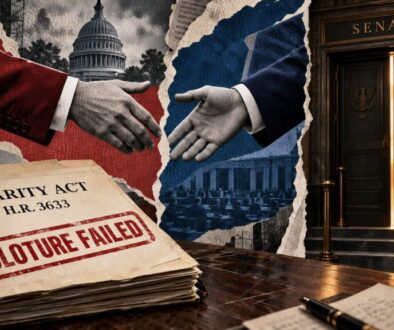
Crypto oversight split heads to Senate panel vote
The Senate Banking Committee is preparing a critical vote on federal crypto legislation that would split market oversight between the SEC and CFTC, a framework that could reshape how institutional investors access regulated digital asset trading. The bill faces its second attempt after collapsing in January over conflicting demands from banks, crypto firms, and both parties on stablecoin rewards and anti-money laundering standards.
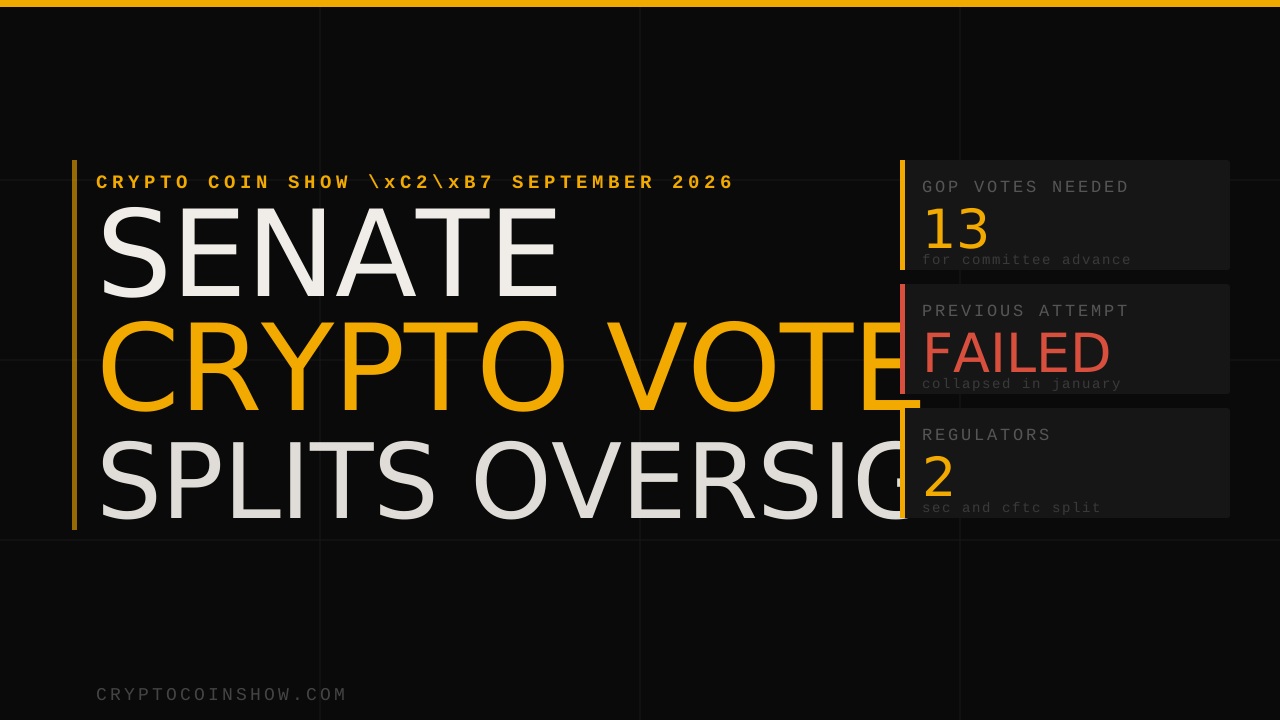
- Senate Banking Committee chairman Tim Scott requires all 13 Republican votes to advance the bill to full Senate consideration
- A stablecoin amendment by Senators Thom Tillis and Angela Alsobrooks permits crypto rewards without banks’ yield restrictions, enabling Coinbase support
- The bill must pass the Senate before year-end 2026 and needs seven Democratic votes beyond Republican support to reach President Trump
- 13 Republican committee members whose unanimous backing Scott deems necessary for passage
- 7 Democratic Senate votes required beyond Republican majority for full chamber passage
- 2026 year-end deadline to send legislation to President Trump’s desk for signature
The Senate Banking Committee stands on the threshold of a second attempt to establish the first comprehensive federal framework for digital asset regulation in the United States.
The imminent vote will determine whether lawmakers can finally advance legislation that assigns primary oversight responsibility to either the Securities and Exchange Commission or the Commodity Futures Trading Commission depending on asset classification, a structural choice that has enormous consequences for how institutional capital flows into crypto markets.
The bill represents the culmination of months of negotiation between fundamentally opposed constituencies, traditional banks fearing deposit flight to crypto products, digital asset companies seeking clear licensing standards, and Democrats divided between anti-money laundering enforcement and political safeguards around elected officials’ crypto holdings.
The committee’s first attempt in early January failed after weeks of back-and-forth between financial institutions and crypto businesses over language addressing stablecoin incentive structures. That previous version never reached a formal vote. Now, with renewed momentum and a modified stablecoin rewards provision, the committee is positioning itself for action.
Chairman Tim Scott has made clear the political threshold required: he stated last week that he wants “13 of 13 Republicans on board,” meaning every single Republican member of the 13-person GOP contingent must support the measure to demonstrate party unity and maximize leverage with Democrats in the full Senate.
Tillis-Alsobrooks Stablecoin Amendment Wins Crypto Industry but Fails to Placate Banks
The revised language addressing stablecoin rewards, authored by Republican Senator Thom Tillis of North Carolina and Democratic Senator Angela Alsobrooks of Maryland, permits crypto platforms to offer incentives to stablecoin holders without those rewards replicating the yields traditionally offered by banks on deposits.
The amendment was deliberately designed to unlock support from major institutional players in crypto: Coinbase Global Inc. has publicly backed the bill since the language was added, signaling that the crypto sector’s primary institutional voice sees a path forward in the legislation.
Yet banks remain unconvinced. Industry groups representing both large institutions and community lenders have stated that the amendment “fails” to adequately protect traditional bank deposits from being displaced by crypto stablecoin products.
The core banking objection hinges on a technical but critical distinction: stablecoins are digital assets pegged to the U.S. dollar designed to maintain stable value, and if they offer compelling incentive structures, depositors may move funds from savings accounts into crypto holdings.
Banks argue the Tillis-Alsobrooks language does not sufficiently prevent stablecoins from offering economic rewards that would compete directly with bank-deposited capital.
Banks can oppose this language, but we respectfully agree to disagree.
Senator Thom Tillis, North Carolina Republican
Tillis responded to banking concerns via social media, effectively signaling that further movement on the stablecoin language may be limited even though both parties acknowledge the issue remains unresolved.
Democrats Block Path Forward on Anti-Money Laundering and Conflict-of-Interest Rules
While the stablecoin dispute splits Republicans from banks, Democratic opposition reflects two distinct fault lines within the party. One cohort of Democrats wants significantly stricter anti-money laundering and know-your-customer requirements built into the bill, arguing that existing crypto-market compliance infrastructure is insufficient to prevent illicit capital flows.
A second group of Democrats is focused on inserting language that would prevent elected officials from earning financial returns on digital asset projects, a safeguard they view as essential to preventing conflicts of interest in legislation that regulates the industry itself.
Neither Democratic position appears to have found its way into the current committee text, creating a negotiating dynamic in which the committee vote may proceed without resolution of these issues.
Senators and crypto lobbyists privately expect that changes to address some Democratic concerns can still be made between the committee vote and any floor action in the full Senate, though this window for negotiation is narrowing significantly. The committee vote is imminent, and the political calendar constrains the available time.
Year-End 2026 Deadline Creates Hard Stop for Passage Before Trump Takes Office
The institutional investor significance of this bill hinges partly on timing and partly on political will. The House passed its own version of the Clarity Act in July, creating a baseline framework that the Senate must now match or reconcile. Critically, the Senate must pass the bill before the end of 2026 for it to reach President Trump’s desk for signature during his term.
That deadline is firm and effectively non-negotiable given Trump’s stated receptiveness to crypto regulation and his documented engagement with the industry.
To reach the President, the bill must first clear the full Senate, not just the Banking Committee. That requires the Republican caucus to hold together, currently 53 members, plus at least 7 Democratic votes to reach the 60-vote threshold needed to overcome a filibuster. The committee vote is therefore only the first gate.
Scott’s insistence on 13 Republican votes in committee is a signal that leadership intends to enter full Senate negotiations from a position of apparent consensus, making it harder for the minority to argue the bill lacks bipartisan support.
Institutional investors tracking this bill are watching whether Democrats will ultimately provide those seven votes or whether they will use filibuster leverage to extract concessions on AML rules and conflict-of-interest language before allowing a vote.
The committee vote itself will be the clearest indicator of whether Republicans can achieve Scott’s target of unanimity and whether Tillis-Alsobrooks has genuinely moved enough Democrats to signal their eventual support in the full Senate. If the committee vote proceeds and passes with a significant margin, it would suggest negotiations are on track for a full Senate vote sometime in 2025, giving Democrats months to negotiate further changes before the 2026 year-end deadline. Conversely, if Democrats block the committee vote or vote overwhelmingly against it, the timeline to pass legislation before Trump leaves office in January 2029 could become severely compressed, or the bill could fail entirely.