The SEC Just Gave Nasdaq Permission to Tokenize Wall Street
In a landmark ruling issued March 18, the Securities and Exchange Commission approved Nasdaq’s framework to settle trades as blockchain tokens — a structural shift that puts regulated U.S. equity markets on-chain for the first time in history.
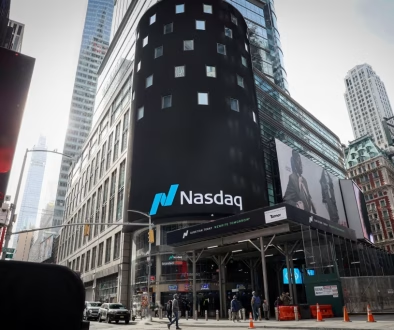
The Securities and Exchange Commission has approved a rule change that allows The Nasdaq Stock Market LLC to trade securities in tokenized form — formally embedding blockchain technology into the infrastructure of one of the world’s largest stock exchanges. The order, published March 18, 2026 under Release No. 34-105047, marks a turning point that the crypto industry has been building toward for over a decade.
Nasdaq first filed the proposal in September 2025 under File No. SR-NASDAQ-2025-072, setting out a framework to let eligible market participants opt into blockchain-based settlement on a trade-by-trade basis. After two amendment rounds, a public comment period, and months of Commission review, the SEC gave its formal approval — and with it, a clear signal that tokenized securities are no longer a future concept. They are present-tense American financial infrastructure.
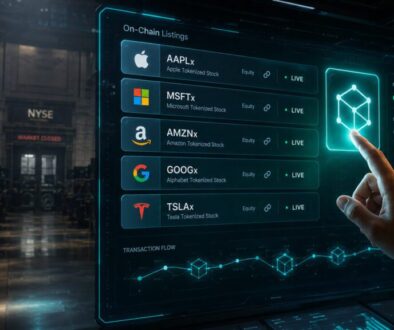
The approved rule change amends Nasdaq’s exchange rulebook to recognize a new category of security: a “tokenized DTC Eligible Security.” Under the framework, any share that qualifies can be traded in Nasdaq’s existing order book alongside its traditional counterpart — same ticker, same CUSIP number, same execution priority. The tokenized and non-tokenized versions of a given stock are designed to be fully fungible, carrying identical shareholder rights including dividends and proxy voting.
Eligible securities under the initial scope include Russell 1000 stocks as well as exchange-traded funds tracking the S&P 500 and Nasdaq 100 — a broad and immediately liquid universe. The launch is contingent on the Depository Trust Company completing the necessary system upgrades to support blockchain clearing and settlement, with the first token-settled trades potentially possible by the end of Q3 2026.
Tokenized shares will trade in the same order book, carry the same CUSIP number, and afford the same investor rights as traditional stock. The plumbing is different. Everything else is the same.
From SEC Release No. 34-105047, March 18, 2026For the blockchain industry, the significance here is less about which stocks can now be tokenized and more about what the approval structurally represents. This is the first time in U.S. history that a traditional national securities exchange has received regulatory approval to fully integrate tokenized assets into its live trading infrastructure — not in a sandbox, not in a pilot, but as a formal rule change embedded in the exchange’s governing rulebook.
The decision also validates years of industry argument that tokenization of real-world assets does not require a parallel financial system — it can be layered directly onto existing market structure. Tokenized shares on Nasdaq share an order book with traditional shares. There is no separate venue, no separate price discovery, no liquidity fragmentation. The blockchain becomes the back-office, not the marketplace.
It is worth noting what this approval explicitly is not. The SEC’s order restricts token settlement activity to the DTC’s closed pilot program, which operates as a permissioned system. This is not an open-blockchain, permissionless environment. Participants must be DTC-eligible, and the initial blockchain is not specified as Ethereum, Solana, or any public network. For crypto purists who view openness as the core value proposition of distributed ledger technology, this may read as a partial win — Wall Street adopting the form of blockchain while retaining the function of centralized gatekeeping.
The immediate next step is on the DTC’s side. Before the first token-settled trade can clear, the Depository Trust Company must complete the technical build-out of its tokenization services and onboard DTC-eligible participants into the pilot. Nasdaq has not announced which specific blockchain network will host the tokens at launch, noting that “other forms of tokenization and clearance and settlement are under discussion.”
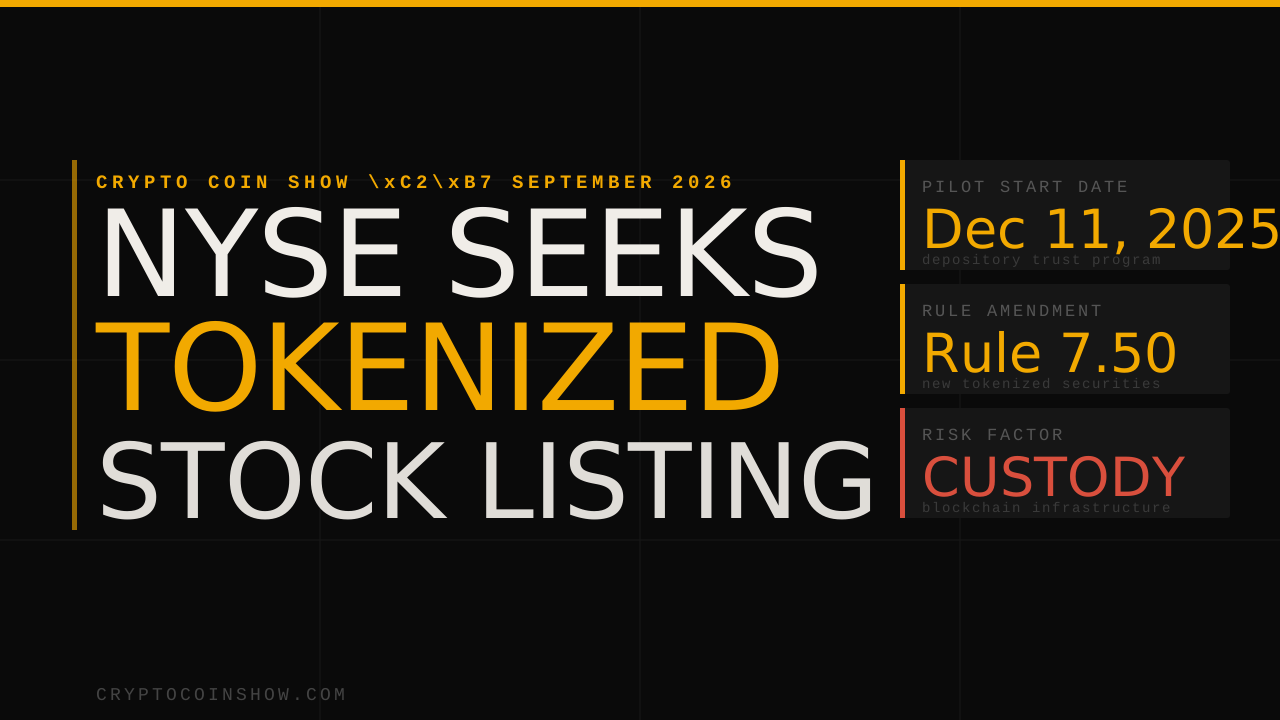
The approval is also likely to accelerate similar filings from competing exchanges. NYSE parent ICE has been actively exploring tokenization, and the SEC’s willingness to approve Nasdaq’s framework removes a significant regulatory uncertainty from the path. The question is no longer whether tokenized equity trading will be permitted in the United States — it has been. The question is how quickly the infrastructure catches up to the rulebook.
For crypto-native projects building in the RWA tokenization space — protocols that have been anticipating exactly this kind of regulatory green light — the March 18 approval represents both validation and increased competitive pressure. Institutional-grade tokenization is no longer just a pitch deck promise. It is a Nasdaq rule.
Stories like this — regulatory shifts, RWA tokenization, SEC policy — are covered every week in CCS Insider. 150,000+ subscribers. Syndicated on Refinitiv TV. Subscribe free and stay ahead of the market structure.
Subscribe to CCS Insider →