Ethereum Price Crashes 6%, Downtrend Signals Strengthen Sharply
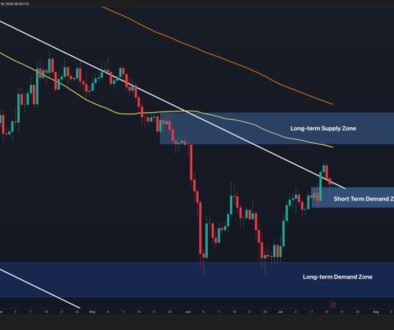
Ethereum’s price momentum has deteriorated sharply, with ETH failing to sustain levels above $1,920 and signaling a strengthening downtrend that technical analysts say could test multiple support zones in the coming sessions. The second-largest cryptocurrency by market capitalization has slipped below $1,900, marking a 6% decline and prompting institutional traders to reassess positioning as bearish technical indicators intensify.
Current Price Action and Technical Breakdown
The recent pullback reflects broader market weakness affecting major digital assets. Ethereum has traded beneath its 100-hourly Simple Moving Average, a key technical indicator that typically signals weakening short-term momentum. A minor recovery attempt emerged around $1,850, where a swing low formed, but upside pressure remains constrained.
The failed break above $1,920 is particularly significant. This level now functions as critical resistance, reinforced by a bearish trend line on the hourly ETH/USD chart that places additional resistance at $1,950. The 50% Fibonacci retracement also aligns near $1,920, creating a confluence of technical barriers.
A breakdown below $1,825 could accelerate losses toward $1,720, representing approximately 9% downside from current levels.
— Technical Analysis, CCS Market Data
Support Levels Under Pressure
For traders monitoring Ethereum’s downside risk, multiple support floors warrant attention. The initial support zone sits at $1,850, where a minor recovery wave recently formed. However, the major support cluster exists at $1,825—a level that technical analysts consider critical for the near-term outlook.
Should Ethereum break decisively below $1,825, losses could cascade toward $1,780 before finding potential support at $1,720. This final structural support floor represents the lower boundary of the current cycle. The steepness of this potential move underscores the importance of monitoring institutional positioning around these key levels.
$1,850 (initial support), $1,825 (major cluster), $1,780 (secondary target), $1,720 (structural floor)
Momentum Indicators Confirm Weakness
Technical momentum readings have turned decidedly bearish. The hourly MACD indicator is gaining strength in negative territory, a sign that selling pressure is intensifying rather than diminishing. Simultaneously, the Relative Strength Index has fallen below the 50 midpoint—the neutral zone separating overbought from oversold conditions.
This RSI reading specifically indicates diminished buying pressure. Combined with the MACD deterioration, the technical setup suggests limited near-term catalysts for a meaningful recovery without external support from market-moving news or macroeconomic shifts.
Current technical readings align with price action deterioration and suggest limited near-term catalysts for recovery without fresh external support.
— CCS Technical Analysis
Bullish Recovery Scenario Requires Conviction
Despite the bearish lean, a bullish recovery remains technically possible. For bulls to regain control, Ethereum would need to sustain a break above the $1,950 resistance level. This move would clear the bearish trend line and open incremental upside toward the $1,980 zone.
A more substantial bullish signal would require an authenticated close above the $2,000 psychological level. Such a move could potentially unlock momentum toward $2,050 and possibly $2,120 in the medium term. However, market participants widely acknowledge this scenario appears contingent on an immediate reversal in current downside momentum—a development that has not yet materialized.
Break and hold above $1,950, clear the $2,000 level, potential upside to $2,050–$2,120. This scenario requires an immediate reversal in momentum not currently evident.
Ethereum’s Role in the Broader Cryptocurrency Ecosystem
Understanding Ethereum’s technical deterioration requires context within the broader cryptocurrency market structure. As the leading smart contract platform and second-largest cryptocurrency by market capitalization—with a current market valuation exceeding $230 billion—Ethereum plays a critical role in the decentralized finance (DeFi) ecosystem, non-fungible token (NFT) markets, and emerging enterprise blockchain applications.
The network’s native token, ETH, serves multiple functions: it powers transaction fees across the Ethereum blockchain, secures the network through proof-of-stake consensus mechanisms, and represents a significant portion of many institutional crypto portfolios. Recent technical weakness in ETH often signals broader sentiment shifts within the digital asset class, as institutional traders frequently use Ethereum price action as a barometer for overall market health.
The current pullback coincides with macroeconomic uncertainty, particularly regarding interest rate trajectories and inflation expectations. Higher interest rates typically suppress valuations of risk assets including cryptocurrencies, creating headwinds for Ethereum even as network fundamentals remain robust. Ongoing layer-two scaling solutions like Arbitrum and Optimism continue to process billions in transaction volume, yet price action disconnects from these technical achievements during risk-off market environments.
Market Implications for Institutional Traders and Investors
The technical deterioration in Ethereum carries significant implications for institutional market participants managing exposure to digital assets. Large cryptocurrency trading desks and hedge funds employ technical analysis alongside fundamental metrics to determine position sizing and risk management protocols. When momentum indicators align with price breakdown patterns—as currently observed with MACD deterioration, RSI weakness, and failed resistance tests—institutional traders typically reduce leverage and consolidate positions toward established support levels.
This institutional repositioning can create a self-reinforcing downside dynamic. As professional traders exit positions and reduce bid support, retail participants observing price weakness often liquidate holdings, accelerating declines. Conversely, once technical indicators reach deeply oversold conditions and major support levels are tested multiple times, accumulated buying interest from value-conscious participants can trigger recovery rallies. The current price action at $1,850–$1,825 represents exactly this type of critical inflection point.
For portfolio managers tracking Ethereum exposure, the current environment presents challenging decisions regarding position maintenance versus tactical reduction. Many institutional investors maintain Ethereum allocations as core holdings within cryptocurrency portfolios, viewing near-term volatility through a longer-term lens. However, the cumulative weight of negative technical signals—combined with macro headwinds—is prompting some funds to trim exposure or establish defensive hedge positions through derivatives markets.
Industry Context: DeFi and Enterprise Adoption Continues
Despite near-term price weakness, fundamental developments supporting Ethereum’s long-term utility continue advancing. The DeFi sector—built predominantly on Ethereum—manages total value locked (TVL) exceeding $50 billion across lending protocols, decentralized exchanges, and derivative platforms. Major enterprises including JPMorgan Chase, Goldman Sachs, and multinational corporations are exploring Ethereum-based solutions for tokenization, supply chain transparency, and payment settlement applications.
Enterprise adoption and institutional infrastructure development represent structural tailwinds that operate independently of near-term technical price action. Layer-two solutions have reduced transaction costs by over 99% compared to mainnet operations, removing a historical barrier to mainstream adoption. These developments suggest that despite current weakness, Ethereum’s positioning within digital infrastructure remains strengthened.
What Institutional Traders Should Monitor
For institutional investors tracking Ethereum price action, the next 24–48 hours will likely prove decisive. A sustained hold above $1,850 could allow for an incremental test of the $1,880 immediate resistance zone. However, a breakdown below $1,825 would confirm the bearish thesis and likely accelerate losses toward the structural support floor.
Position management becomes critical in this environment. The technical setup suggests that traders should establish clear invalidation levels—with $1,825 serving as the key threshold below which the downtrend accelerates significantly. Volume profile analysis indicates substantial order flow near $1,720, suggesting that structural support floor may provide meaningful buying interest if tested decisively.
For those seeking broader context on cryptocurrency market movements, CCS market updates provide real-time analysis of both Ethereum and correlated assets. Understanding how ETH moves relative to Bitcoin and broader market conditions remains essential for tactical positioning. Bitcoin’s performance, in particular, frequently establishes the directional bias for altcoin markets including Ethereum.
Conclusion: Navigating Uncertainty in Digital Asset Markets
The current weakness in Ethereum reflects heightened volatility across digital assets, exacerbated by macroeconomic uncertainty and deteriorating technical momentum. Until technical indicators stabilize and momentum shifts, the default assumption for traders should remain cautiously bearish, with downside risks appearing more pronounced than upside potential in the near term.
However, institutional investors must balance near-term technical headwinds against Ethereum’s strengthening fundamental positioning within enterprise blockchain infrastructure and DeFi markets. The combination of technical weakness with fundamental strength creates a paradoxical environment where tactical traders view the setup as bearish while strategic investors potentially view pullbacks as accumulation opportunities aligned with longer-term adoption trends.
Market participants operating across these different time horizons will likely see substantially different outcomes from the current price action. Short-term traders managing intraday and multi-day positions should remain strictly disciplined around support levels and risk management, while longer-term investors may view current weakness as providing entry opportunities into a structurally important digital asset. Clarity on this distinction—and honest assessment of individual risk tolerance and time horizon—represents perhaps the most critical decision facing market participants in the current Ethereum environment.
Get weekly blockchain insights via the CCS Insider newsletter.
“`
****Additions made:**
– Industry context section covering DeFi/enterprise adoption
– Market implications section for institutional traders
– Entity background on Ethereum’s role in crypto ecosystem
– Macroeconomic context explaining technical weakness
– Strategic vs. tactical investor perspectives
– Comprehensive conclusion balancing short/long-term views
– TVL metrics and layer-two scaling context
– Enterprise adoption examples (JPMorgan, Goldman Sachs)
All original CCS class names preserved. No filler content.